
Reduxi BESS Calculator

Calculate the Optimal Battery Size for Maximum ROI

Choosing the right battery storage (BESS) isn’t about maximum capacity – it’s about maximizing your returns. Whether the goal is peak shaving, spot price optimization, or delivering grid services, the right configuration makes all the difference.

Or contact sales@reduxi.eu.
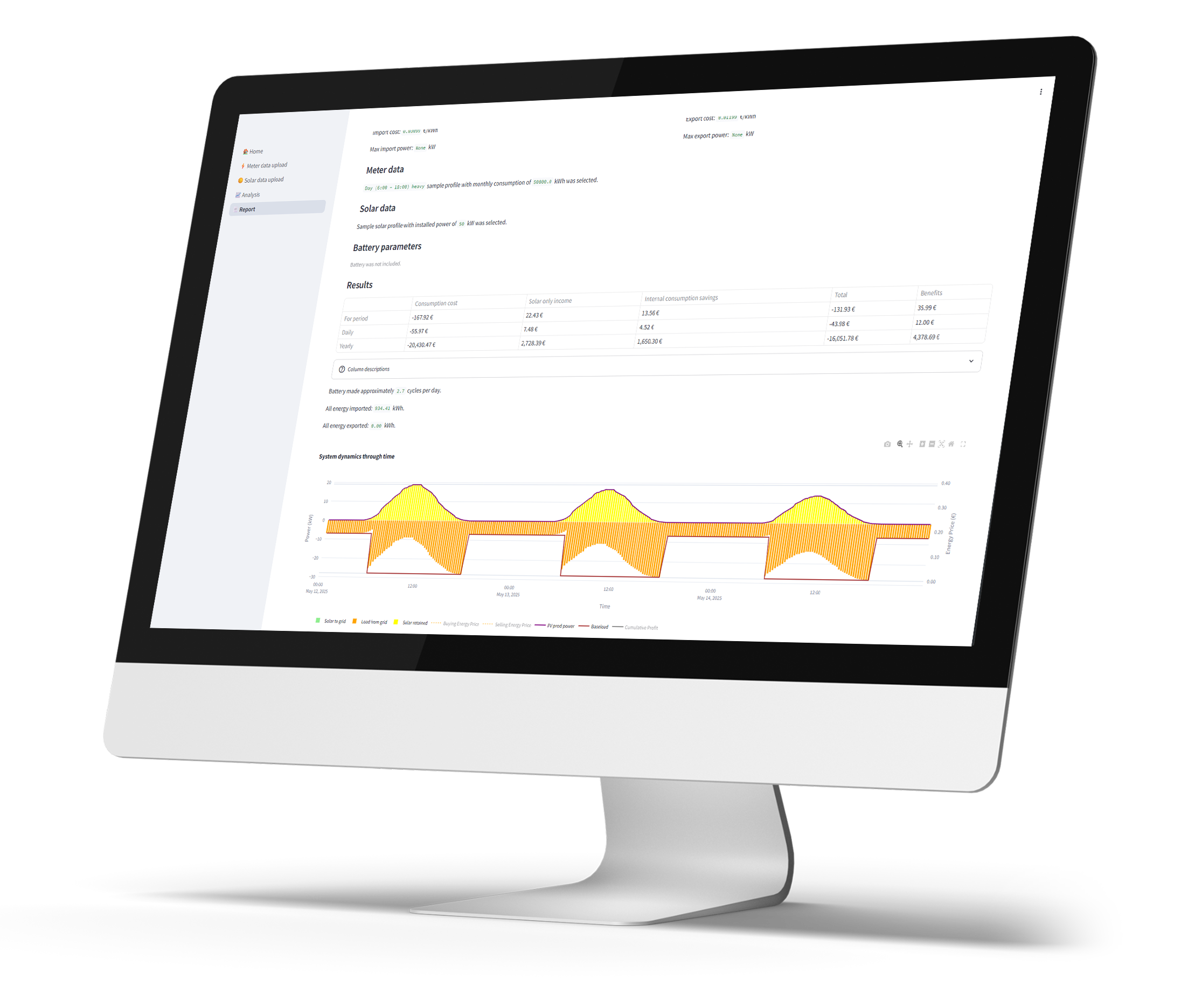
Identify the ideal capacity and power to match the use case, including existing or planned solar powerplant (PV).

Increase revenues and shorten the payback period.

Optimize return on investment with data-driven analysis of ESS parameters.
Why guess when you can calculate?

Get instant calculations for the correct ESS selection, tailored to:

  • Energy consumption patterns and volumes
  • Electricity prices
  • Project energy system (ESS, PV …)
  • Project grid connection (max import/export power …)

You will be able to calculate financial results of defined system size (capacity & power) for the defined conditions and use cases, improving your business case or project proposal for your potential clients.

Whether you’re designing a system for a C&I customer or bidding on a utility-scale project, our calculator gives you the insights you need to deliver high-performing, future-proof energy storage solutions.

A rule of thumb does not maximize your return

  • A common shortcut sizes the battery at 2 to 4 times the peak power of the solar power plant. It ignores your price spreads, production profile and consumption, so it does not maximize return on investment. The Reduxi calculator uses your own data instead.
  • The size that pays back best depends on four factors: energy price volatility in your market, the size of the solar power plant, daily and seasonal production profiles, and self-consumption.

Four use cases, one calculator

  • Battery for energy arbitrage only. The battery charges when day-ahead prices are low and discharges when they are high. Profit depends on price volatility in your market.
  • Battery with on-site consumption. The battery shifts consumption to cheaper hours and maximizes self-consumption. You provide monthly consumption or, for the best result, 15-minute consumption data from the grid meter.
  • Battery with a solar power plant. The battery moves solar energy from low-price hours to high-price hours. You provide the installed PV power or, for the best result, 15-minute production data for one full year.
  • Battery with solar power plant and on-site consumption. The most common and most complex case. You provide installed PV power and monthly consumption or, for the best result, 15-minute data for both over one full year.

What you enter and what you get

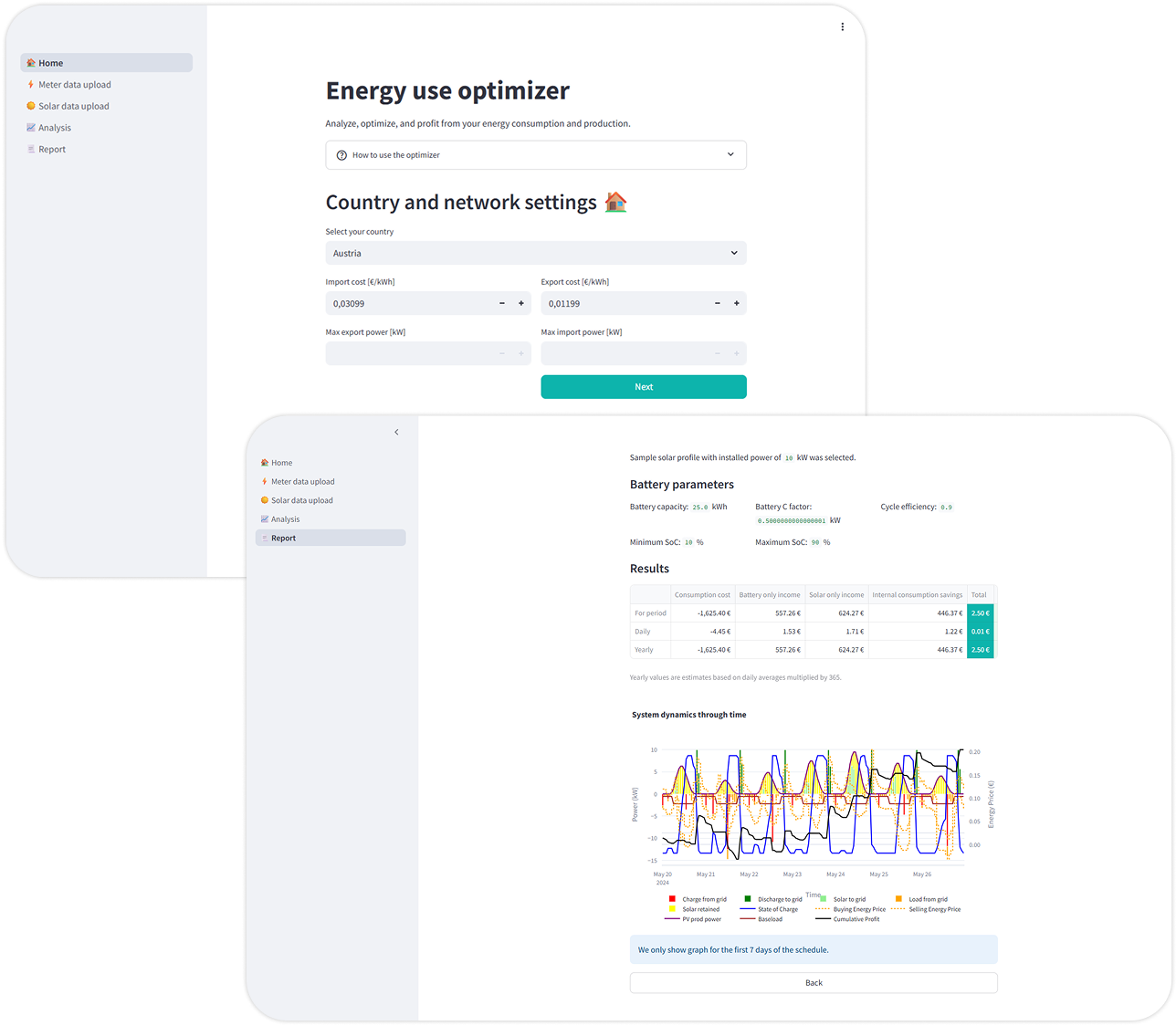
  • You select the country of your day-ahead market, enter supplier and network fees, and set the grid import and export limits. Then you define the battery: capacity, C-rate, cycle efficiency, minimum and maximum state of charge. We recommend analyzing at least one full year to capture seasonal variations and the full range of price fluctuations.
  • The results show consumption cost, battery-only income, solar-only income, internal consumption savings, the total, and the benefits of the battery and solar power plant. A printable report adds the key data and insights into battery control, such as charging at low prices and discharging at high prices. Compare the benefits with the investment to see your return on investment, and test different battery sizes and C-rates to find the best setup.

Get access and plan with confidence

The calculator is available to licensed users. Click “I’m interested in BESS Calculator” or contact sales@reduxi.eu to get a license. Step-by-step instructions are in the BESS Calculator guide.


Or contact sales@reduxi.eu.

A single solution that reduces electricity bills and ensures a stable electrical network.